Highlights
Evolutionary Deep Neural Networks
Developing mesh-free, physics-informed neural network solvers for coupled physics problems in solid mechanics at Johns Hopkins University.
Read the project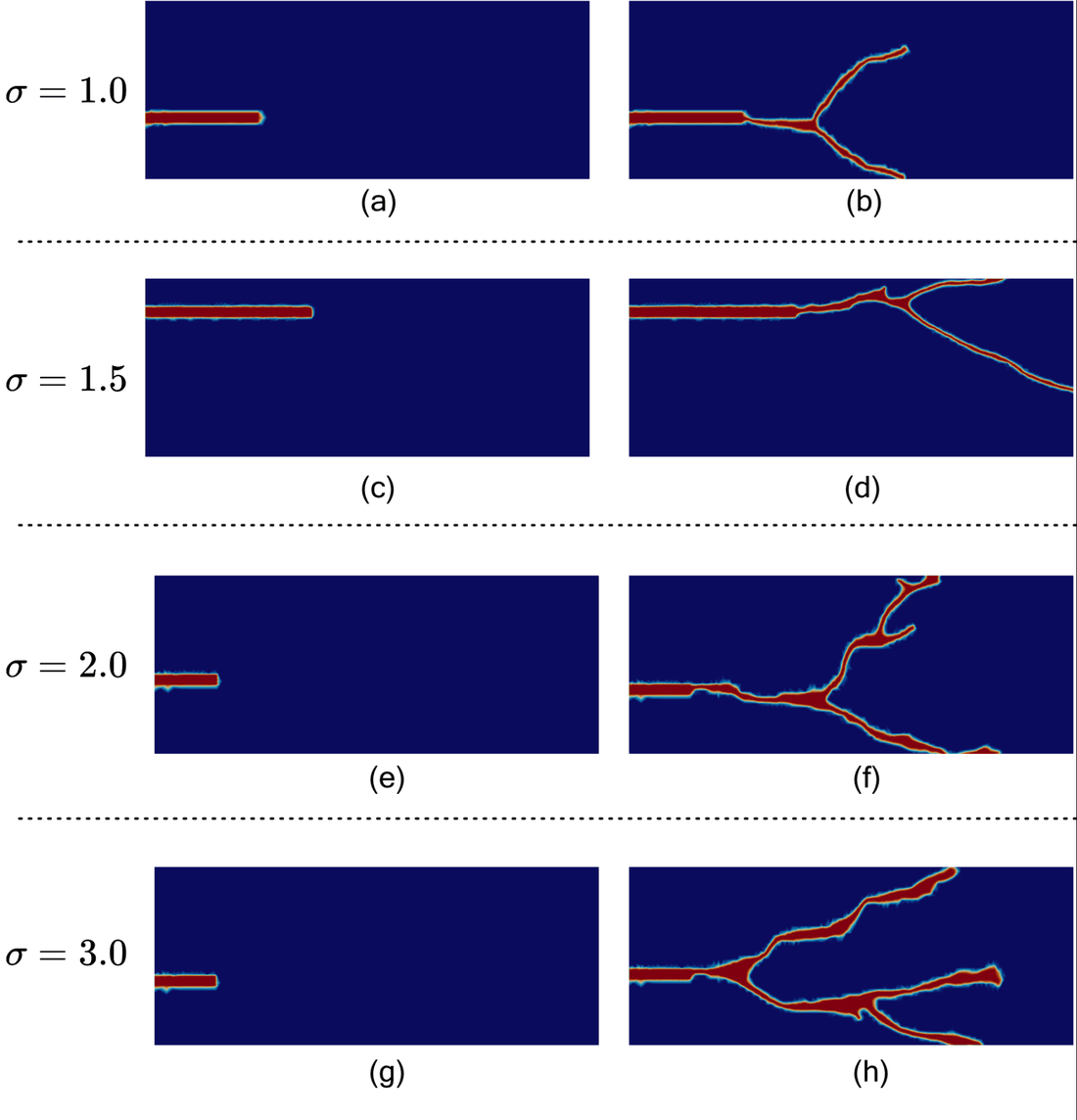
Fracture-Bench
Benchmarking neural-operator surrogates for fracture with shared datasets and consistent evaluation, enabling comparisons across scientific machine learning approaches.
Read the project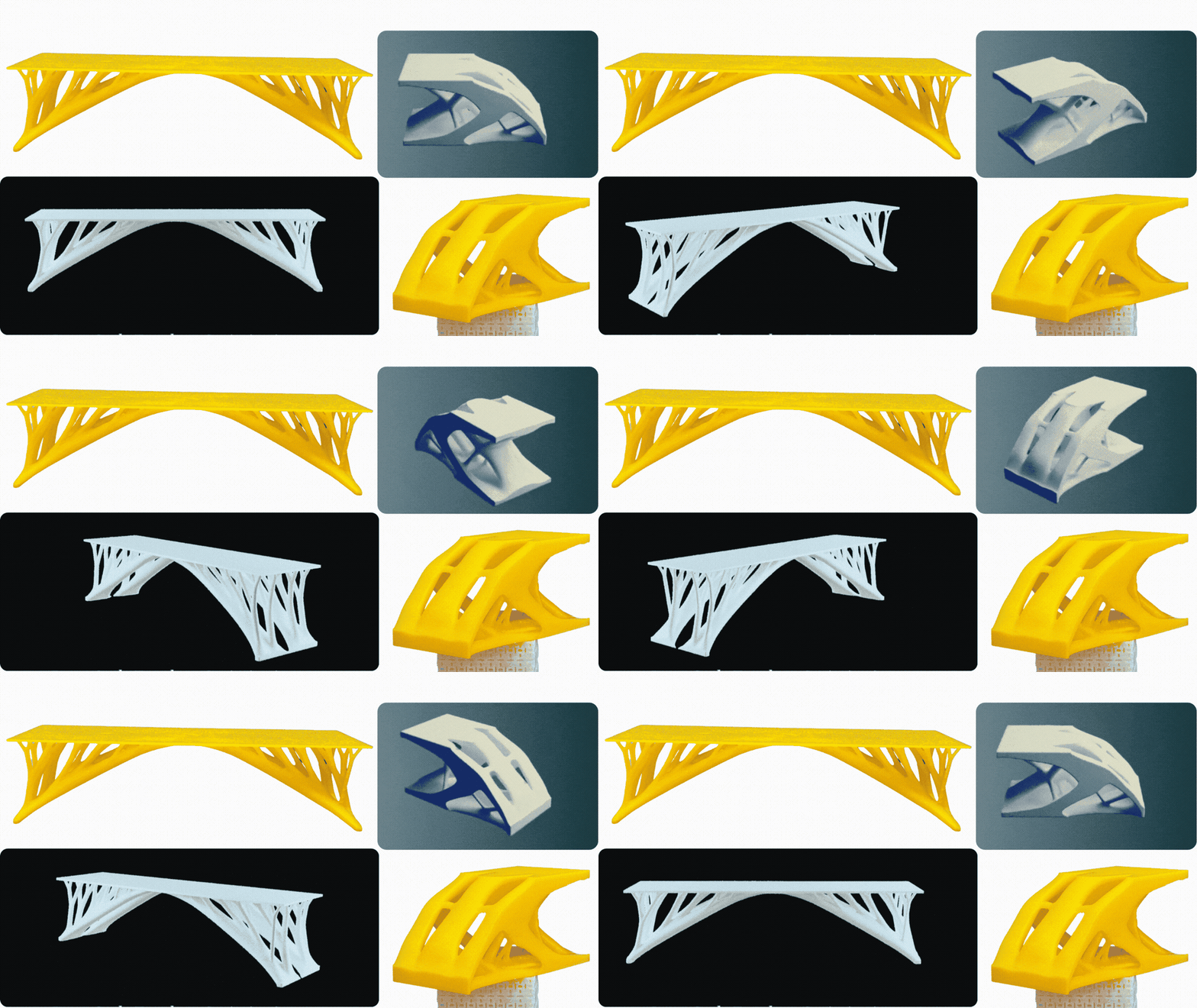
Large Scale Topology Optimization
Letting the optimizer decide where material should go inside a design domain — scaled up to large 3D problems in FEniCS with MPI parallelism, then 3D printed to see whether the answer really carries its load.
Read the project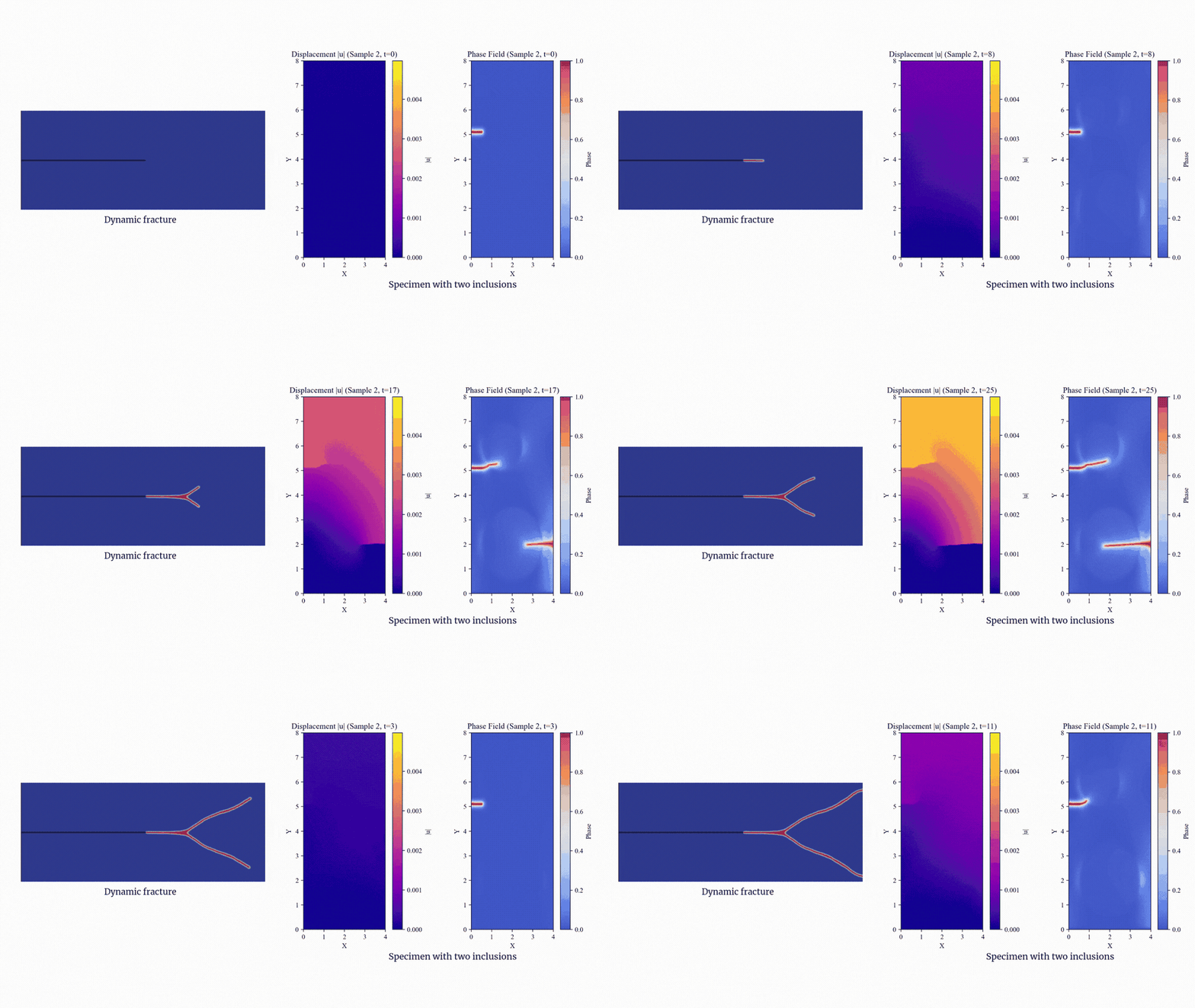
Phase Field Fracture and Mesh Adaptivity
Cracks as a smooth damage field rather than a moving boundary. Adaptive refinement guided by an energy-based error indicator keeps fast crack growth accurate without meshing the whole domain finely.
Read the project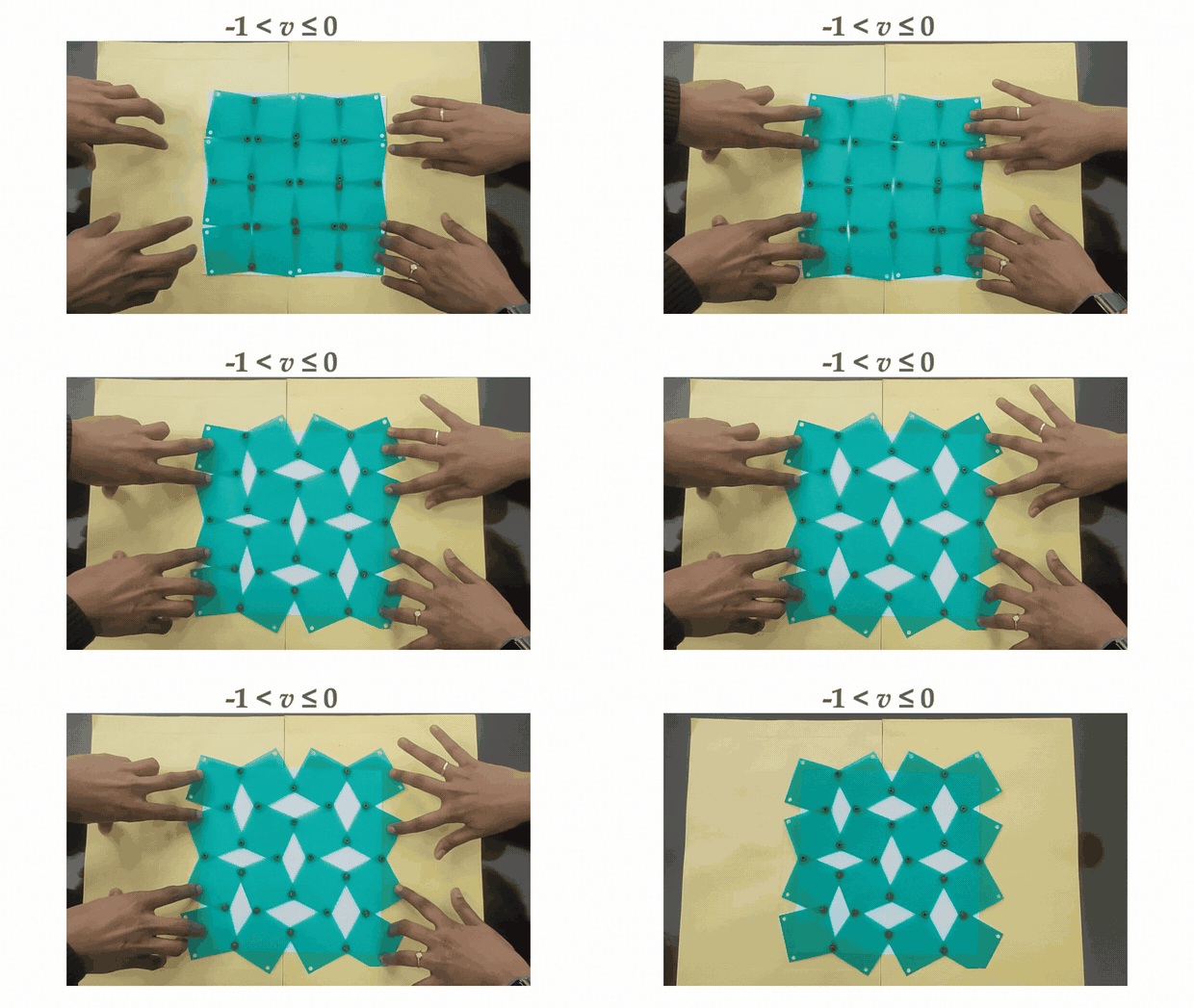
Auxetic Metamaterials
Materials that get wider when you stretch them. The negative Poisson's ratio comes from the geometry of the microstructure, not the material — designed by topology optimization, then printed and tested.
Read the project
Some Cool 3D Printed Samples
The part of the work you can actually hold. Optimized geometries and metamaterial unit cells taken off the screen and onto the print bed, where a design either survives being squashed or it doesn't.
Read the project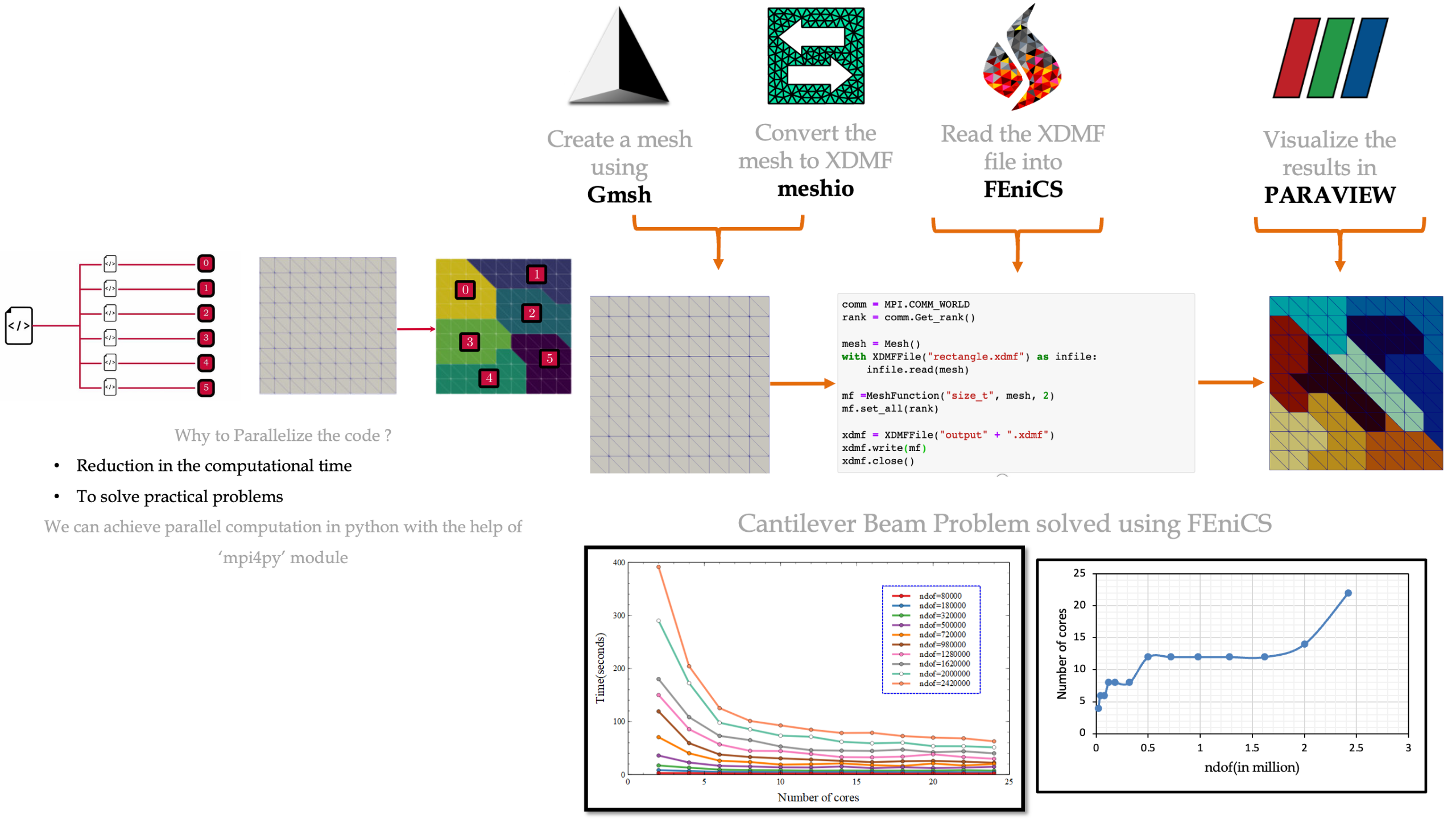
Parallel Processing
Getting a mesh from Gmsh into FEniCS and out to ParaView, then solving it across many cores — the pipeline behind every large simulation here.
U. M. Krishnan, A. Gupta, and R. Chowdhury. Working with complex meshes: The mesh processing pipeline. FEniCS 2021. doi: 10.6084/M9
Read the project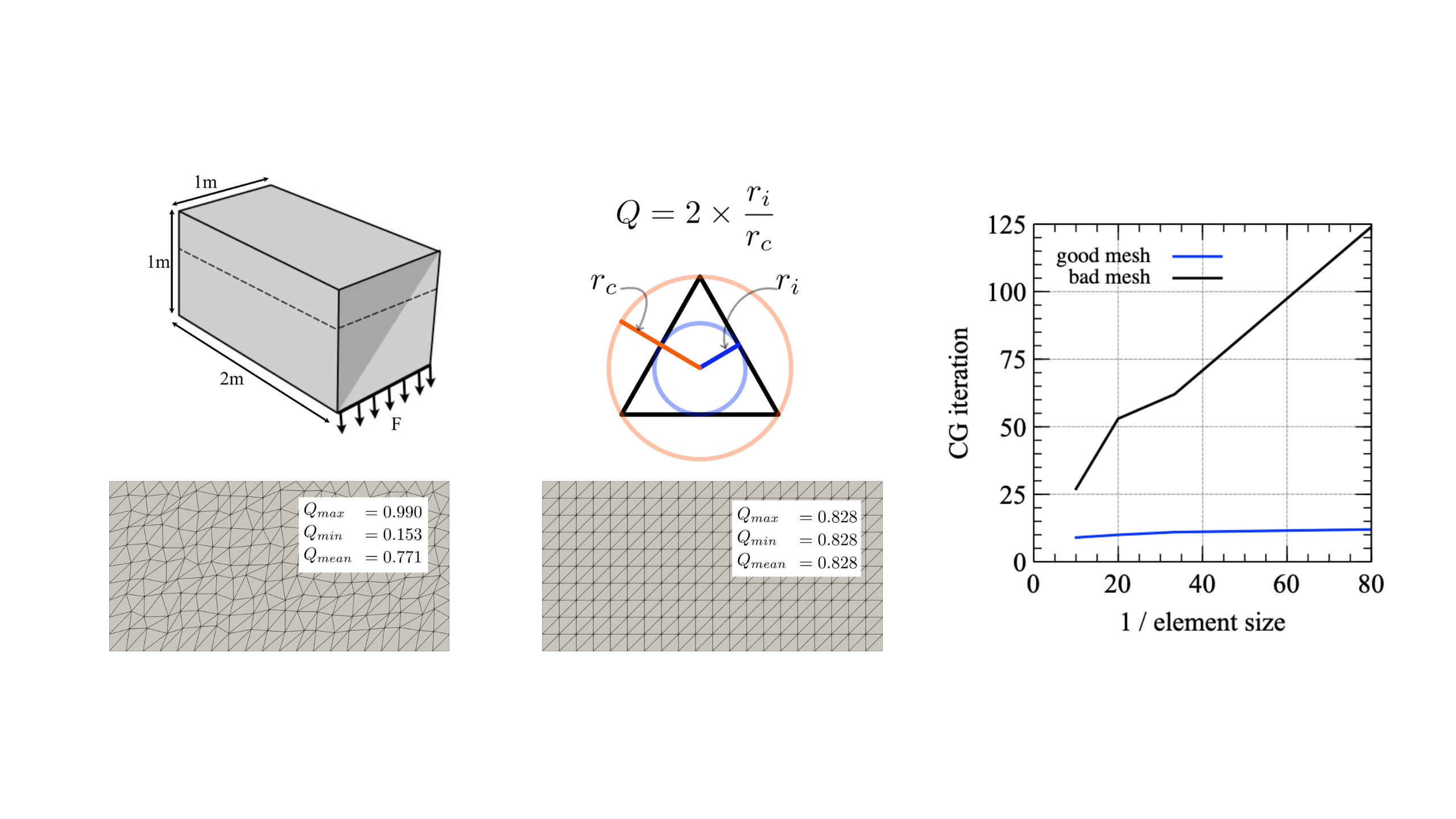
Why Mesh Quality Matters
A badly shaped element is not just ugly — it costs iterations. Comparing convergence on good and bad meshes shows why quality metrics deserve attention before you ever hit run.
U. M. Krishnan, A. Gupta, and R. Chowdhury. Working with complex meshes: The mesh processing pipeline. FEniCS 2021. doi: 10.6084/M9
Read the project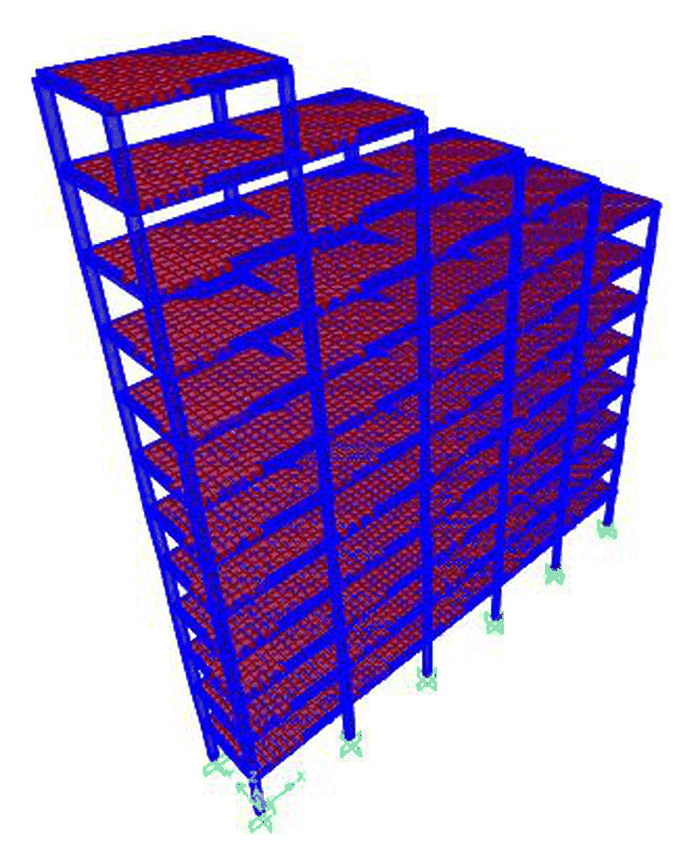
Seismic Response of Irregular Buildings
Stepped buildings and buildings on sloping ground are everywhere, yet the code says little about how their design forces should change. Across 32 frames I built an irregularity index and a magnification factor that pulls the code estimate back in line with the real response.
Read the project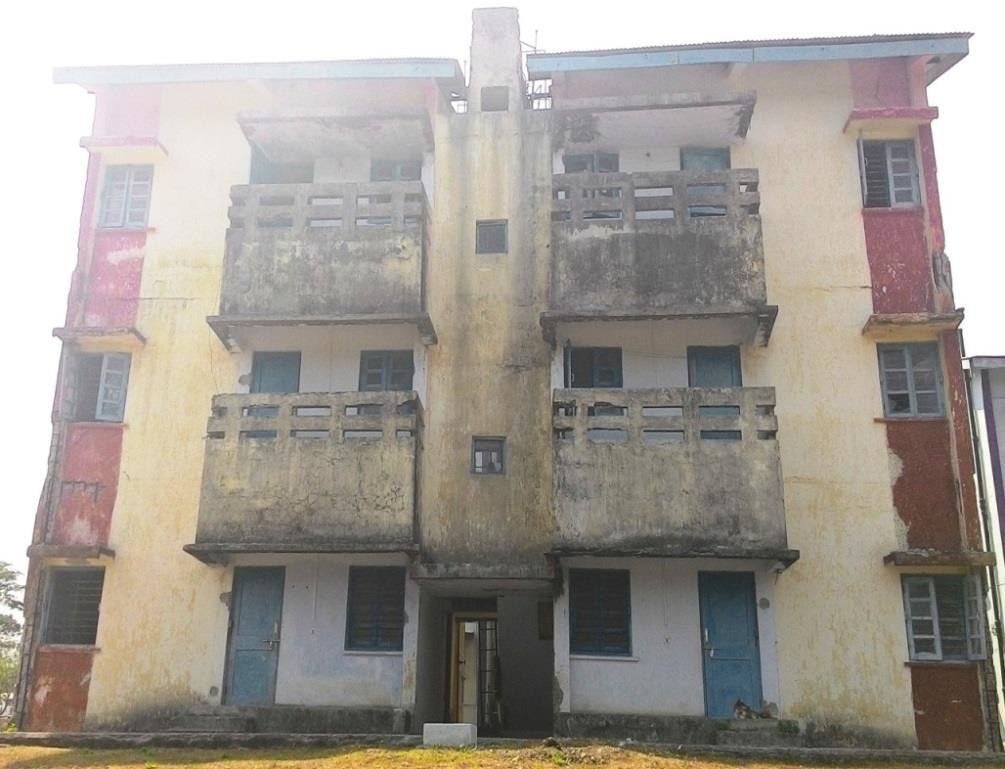
Condition Assessment of an RC Building
A G+2 residential block from 1991, no longer serviceable and with no structural drawings left. A rebound hammer and ultrasonic pulse velocity recovered its real concrete strength — and that revealed which beams and columns could no longer carry their load.
Read the project